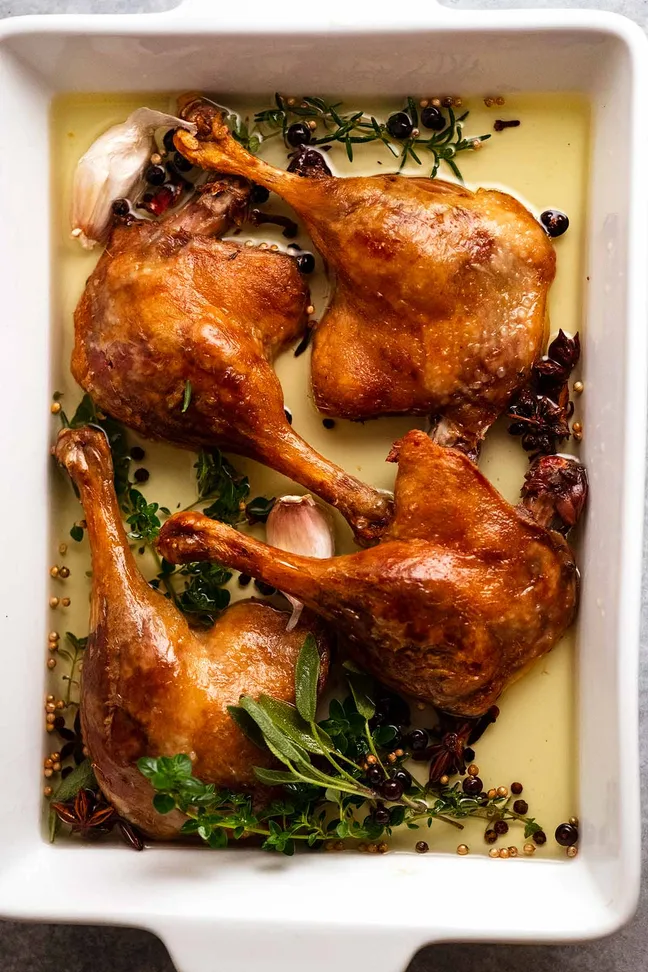
Confit de canard recipe is a traditional French dish made by slow-cooking duck legs in their own fat until tender, then crisping the skin before serving. This confit de canard recipe delivers rich flavor, soft meat, and a crispy finish, making it a classic gourmet preparation.
This confit de canard recipe focuses on low and slow cooking to create a tender texture while preserving moisture. The final crisping step adds contrast, resulting in a balanced and satisfying dish.
This dish is a classic example of French cuisine, known for its traditional techniques and deep flavors.
Table of Contents
• Ingredients
• How to Make Confit de Canard Recipe
• Pro Tips for Best Results
• Serving Suggestions for Confit de Canard
• Nutritional Information
• Frequently Asked Questions
Why This Confit de Canard Recipe Works
This confit de canard recipe is designed to create a rich and tender dish.
• Slow cooking creates tender meat
• Duck fat enhances flavor
• Curing adds depth
• Crisping adds texture
Ingredients
For the Duck
• 2 duck legs (with skin)
• 2 teaspoons salt
• 1 teaspoon black pepper
• 3–4 cloves garlic (crushed)
• 2–3 sprigs thyme
• 2 bay leaves
For Cooking
• 2–3 cups duck fat (enough to cover duck legs)
For Serving (Optional)
• Roasted potatoes
• Fresh parsley
How to Make Confit de Canard Recipe
Step 1: Cure the Duck
Rub duck with salt, pepper, garlic, thyme, and bay leaves. Refrigerate for 12–24 hours.
Step 2: Prepare for Cooking
Rinse off excess salt and pat dry.
Step 3: Slow Cook
Place duck in a dish, cover with duck fat, and cook at 120°C (250°F) for 2.5–3 hours.
Step 4: Crisp the Skin
Remove duck and cook skin-side down in a pan until crispy.
Step 5: Serve
Serve hot with sides.
Pro Tips for Best Results
• Cook low and slow
• Use enough fat to submerge
• Do not skip curing step
• Crisp skin before serving
Serving Suggestions for Confit de Canard
Serve with:
• Roasted potatoes
• Vegetables
• Salad
• Bread
This confit de canard recipe pairs well with dishes like Quiche Lorraine for a complete meal.
Nutritional Information (Approx. per serving)
Calories: 600–700 kcal
Protein: 25–30 grams
Carbohydrates: 2–5 grams
Fat: 55–65 grams
Fiber: 0–1 gram
Sodium: Moderate
Storage and Reheating
Store submerged in fat in the refrigerator for several weeks.
For best results:
• Reheat gently
• Crisp before serving
Frequently Asked Questions
What does confit mean?
It refers to slow cooking in fat.
Can I use other fats?
Yes, but flavor will differ.
How long can it be stored?
Several weeks if stored properly.
Why is it not crispy?
It needs a final pan-searing step.
Can I use chicken?
Yes, but flavor is lighter.
How to Achieve Tender Duck
Confit de canard recipe depends on slow cooking.
Cooking at low temperature allows the fat to break down connective tissue, resulting in tender meat.
How to Get Crispy Skin
This confit de canard recipe requires a finishing step.
Cooking skin-side down in a hot pan renders fat and creates a crispy texture.
Variations You Can Try
• Use different herbs
• Add garlic flavor
• Try goose fat
• Serve with different sides
Common Mistakes to Avoid
• Cooking too fast
• Not using enough fat
• Skipping curing step
• Not crisping skin
Make-Ahead and Storage Tips
This confit de canard recipe is ideal for preparation ahead.
• Store in fat
• Keep refrigerated
• Reheat when needed
How to Turn This Into a Complete Meal
This confit de canard recipe can easily become a full dinner.
Serve with vegetables and potatoes to balance the richness. Adding lighter sides enhances the overall meal.
Final Thoughts
This confit de canard recipe is rich, traditional, and deeply flavorful, making it a standout dish for special occasions.
Related Recipes You’ll Love
– Chicken Fricassée
– Quiche Lorraine
– Cassoulet
Explore More Easy Dinner Recipes
Discover more quick and simple meal ideas for any night:
Author Note
Dinners Recipe Team shares simple, reliable recipes designed for home cooks. Our goal is to make cooking easier while delivering flavorful, satisfying meals.
Image Credit
“Cassoulet au Confit de Canard” by ZhengZhou is licensed under CC BY-SA 4.0. https://creativecommons.org
Leave a Reply