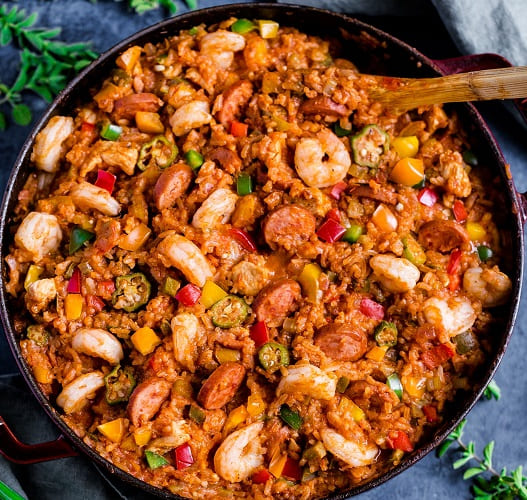
New Orleans jambalaya recipe is a bold and hearty one-pot rice dish made with chicken, sausage, shrimp, vegetables, and Cajun-inspired spices. This New Orleans jambalaya recipe combines smoky, savory, and spicy flavors into a filling meal that works well for family dinners, gatherings, or meal prep.
This New Orleans jambalaya recipe focuses on building flavor step by step while allowing the rice to absorb the rich broth and seasonings. The result is a balanced dish packed with protein, texture, and classic Louisiana flavor.
Table of Contents
• Ingredients
• How to Make New Orleans Jambalaya Recipe
• Pro Tips for Best Results
• Serving Suggestions for New Orleans Jambalaya
• Nutritional Information
• Frequently Asked Questions
Why This New Orleans Jambalaya Recipe Works
This New Orleans jambalaya recipe is designed to create deep flavor using simple one-pot cooking techniques.
• Rice absorbs rich seasoning and broth
• Sausage adds smoky flavor
• Shrimp and chicken create balance
• One-pot cooking keeps preparation simple
Ingredients
Protein & Seafood
• 1 lb chicken thighs, cut into bite-sized pieces
• 1 lb smoked andouille sausage, sliced
• 1 lb shrimp, peeled and deveined
Vegetables & Aromatics
• 2 tablespoons olive oil
• 1 large onion, chopped
• 1 green bell pepper, chopped
• 1 red bell pepper, chopped
• 2 celery stalks, chopped
• 4 cloves garlic, minced
• 2 tomatoes, chopped
Rice & Liquid
• 2 cups long-grain rice
• 4 cups chicken broth
Spices
• 2 teaspoons paprika
• 1 teaspoon oregano
• 1 teaspoon thyme
• 1 teaspoon cayenne pepper
• 1 teaspoon black pepper
• 1 teaspoon salt
• 2 bay leaves
• 1 teaspoon Creole seasoning (optional)
Optional Garnishes
• Green onions
• Fresh parsley
• Lemon wedges
• Hot sauce
How to Make New Orleans Jambalaya Recipe
Step 1: Prepare Ingredients
Cut chicken into pieces, slice sausage, clean shrimp, and chop vegetables.
Step 2: Cook Chicken and Sausage
Heat oil in a large pot.
Cook chicken until browned and remove.
Cook sausage until lightly crisp and remove.
Step 3: Build the Flavor Base
Add onion, bell peppers, and celery to the pot.
Cook until softened, then add garlic and tomatoes.
Step 4: Add Rice and Spices
Stir in paprika, oregano, thyme, cayenne, and Creole seasoning.
Add rice and cook briefly to toast lightly.
Step 5: Simmer
Return chicken and sausage to the pot.
Add broth and bay leaves.
Bring to a boil, then reduce heat and simmer covered for about 25 minutes.
Step 6: Add Shrimp
Fold in shrimp during the last few minutes of cooking.
Cook until shrimp turn pink and fully cooked.
Step 7: Serve
Remove bay leaves, fluff rice, garnish, and serve hot.
Pro Tips for Best Results
• Use long-grain rice for proper texture
• Add shrimp near the end to avoid overcooking
• Simmer gently to prevent mushy rice
• Taste and adjust seasoning gradually
Serving Suggestions for New Orleans Jambalaya
Serve with:
• Cornbread
• Salad
• Garlic bread
• Roasted vegetables
This New Orleans jambalaya recipe pairs well with dishes like this Chili Con Carne Recipe for a hearty Southern-style meal.
Nutritional Information (Approx. per serving)
Calories: 450–550 kcal
Protein: 30–35g
Carbohydrates: 40–50g
Fat: 15–20g
Sodium: Moderate to high
Storage and Reheating
Store in the refrigerator for up to 3–4 days.
For best results:
• Reheat slowly with a splash of broth
• Avoid overcooking shrimp during reheating
Frequently Asked Questions
What is the difference between Cajun and Creole jambalaya?
Creole jambalaya typically includes tomatoes, while Cajun jambalaya usually does not.
Can I freeze jambalaya?
Yes, it freezes well for up to 3 months.
How to Build Authentic Jambalaya Flavor
This New Orleans jambalaya recipe depends on layering flavors properly.
Cooking the chicken and sausage first develops a rich base inside the pot. The vegetables absorb these flavors while releasing their own sweetness and aroma.
Toasting the rice briefly before simmering helps it absorb seasoning more effectively and improves texture.
Using broth instead of plain water creates a deeper and more balanced final dish.
How to Keep Jambalaya Rice From Becoming Mushy
The key to this New Orleans jambalaya recipe is controlling liquid and cooking time.
Using long-grain rice helps maintain structure during simmering. Stirring too often can break the rice and release excess starch, leading to a softer texture.
Allowing the rice to cook covered on low heat gives it time to absorb liquid evenly without becoming overcooked.
Adding shrimp at the end also prevents overcooking and keeps the seafood tender.
Variations You Can Try
• Make it Cajun-style without tomatoes
• Use chicken only or sausage only
• Add extra shrimp or seafood
• Use brown rice for a different texture
Common Mistakes to Avoid
• Overcooking shrimp
• Using too much liquid
• Stirring too frequently
• Cooking rice at high heat
Make-Ahead and Storage Tips
This New Orleans jambalaya recipe works very well for meal prep.
• Store leftovers up to 4 days
• Freeze portions individually
• Reheat gently with added broth
How to Turn This Into a Complete Meal
This New Orleans jambalaya recipe is already a balanced one-pot meal, but sides can add more variety.
Serve it with cornbread, salad, roasted vegetables, or garlic bread for a fuller Southern-inspired dinner. A small amount of hot sauce or lemon juice can also brighten the flavors.
This makes it ideal for gatherings, holidays, or large family meals.
Final Thoughts
This New Orleans jambalaya recipe is bold, filling, and easy to prepare, making it a dependable option for flavorful one-pot cooking.
Related Recipes You’ll Love
– Chili Con Carne Recipe
– Smoked Sausages with Beans Recipe
– Steak Burrito Bowl Recipe
Explore More Easy Dinner Recipes
Discover more quick and simple meal ideas for any night:
Author Note
Dinners Recipe Team shares simple, reliable recipes designed for home cooks. Our goal is to make cooking easier while delivering flavorful, satisfying meals.
Leave a Reply